สังคมไทย เป็นสังคมเกษตรเพื่อยังชีพมาแต่ครั้งโบราณกาล
นอกจากการปลูกพืช เลี้ยงสัตว์ไว้ใช้เป็นอาหารและไว้ใช้แรงงานแล้ว
ยังมีความจำเป็นที่จะต้องผลิตสิ่งอื่นที่จำเป็นต่อการดำรงชีวิตไว้ใช้ในครอบครัวด้วย
ดังนั้น เวลาที่ว่างจากงานด้านเกษตรกร จึงเป็นเวลาที่ใช้ทำงานด้านหัตถกรรมแล้ว
ยังนำส่วนที่มากกว่าความต้องการใช้ไปแลกเปลี่ยนสิ่งอื่นที่จำเป็นต่อการดำรงชีวิต
ซึ่งครอบครัวไม่สามารถจะผลิตได้เอง เครื่องปั้นดินเผ่าด่านเกวียน
ก็เป็น ผลิตภัณฑ์ที่เกิดขึ้นในลักษณะดังกล่าวข้างต้น
แม้ว่าจะมีหลักฐานหลายอย่างปรากฏให้เห็นเด่นชัดว่า มีการทำเครื่องปั้นดินเผาอยู่หลายแห่งในภาคอีสานมานานแล้ว
เช่นที่บ้านเชียง แต่ปัจจุบันนี้ เมื่อกล่าวถึงเครื่องปั้นดินเผาของภาคอีสาน
คนไทยทั่วไปทั้งชาวไทยและต่างประเทศ รู้จักเครื่องปั้นดินเผาด่านเกวียนมากกว่าเครื่องปั้นดินเผาจากแหล่งอื่น
เพราะปัจจุบันนี้ เครื่องปั้นดินเผาด่านเกวียนได้วิวัฒนาการจากหัตถกรรมในครัวเรือน
เข้าสู่ระบบอุตสาหกรรมเพื่อส่งออกนอกท้องถิ่น ดังจะเห็นวัตถุประสงค์นี้ได้อย่างชัดเจน
ตั้งแต่การผลิตไปจนถึง รูปแบบ กระบวนการผลิต และระบบการซื้อขายที่แพร่กระจายไปยังตลาดต่างประเทศ ศึกษาประวัติด่านเกวียน
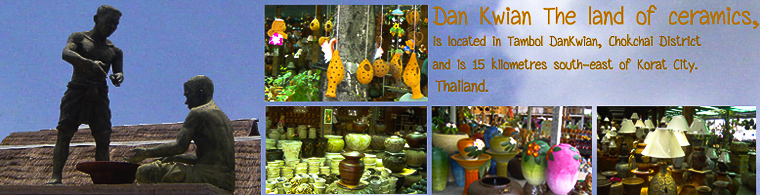
Dan Kwian The land of ceramics, is located in Tambol DanKwian,
Chokchai District and is 15 kilometres south-east
of Korat City. Route No.224 Nakhon Ratchasima - Chokchai
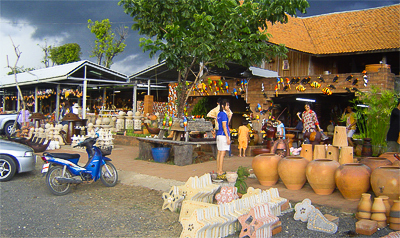
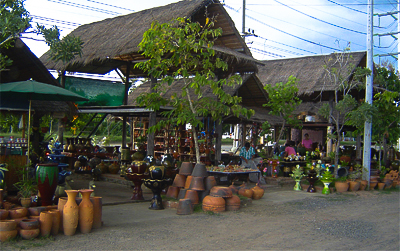
runs thougth the village where both sides of the orad
are fulled of beautiful and astonishing ceramic shops.The
moon River runs on the east side of the village. Dan
Kwian Litter ally means the by-pass area of bull-carts.
As told by the people, years ago, people from variousparts
on the side of the country, for example, Nang Rong,
Buri Ram, Surin, Khunhan, Khukhan and down to khamer
regions, who had travelled west-wards in their carts,
would normally camp their caravans here at Dan Kwian,
During their stops, the travellers or the merchants
would collect the raw clay from the banks of the Moon
River for making earthenware-pots,
jars, table wares, terra cotta etc. Shapes and designs
were copied in traditionnal way as the 'Kha' tribe
who originally lived there. |
|
 |